

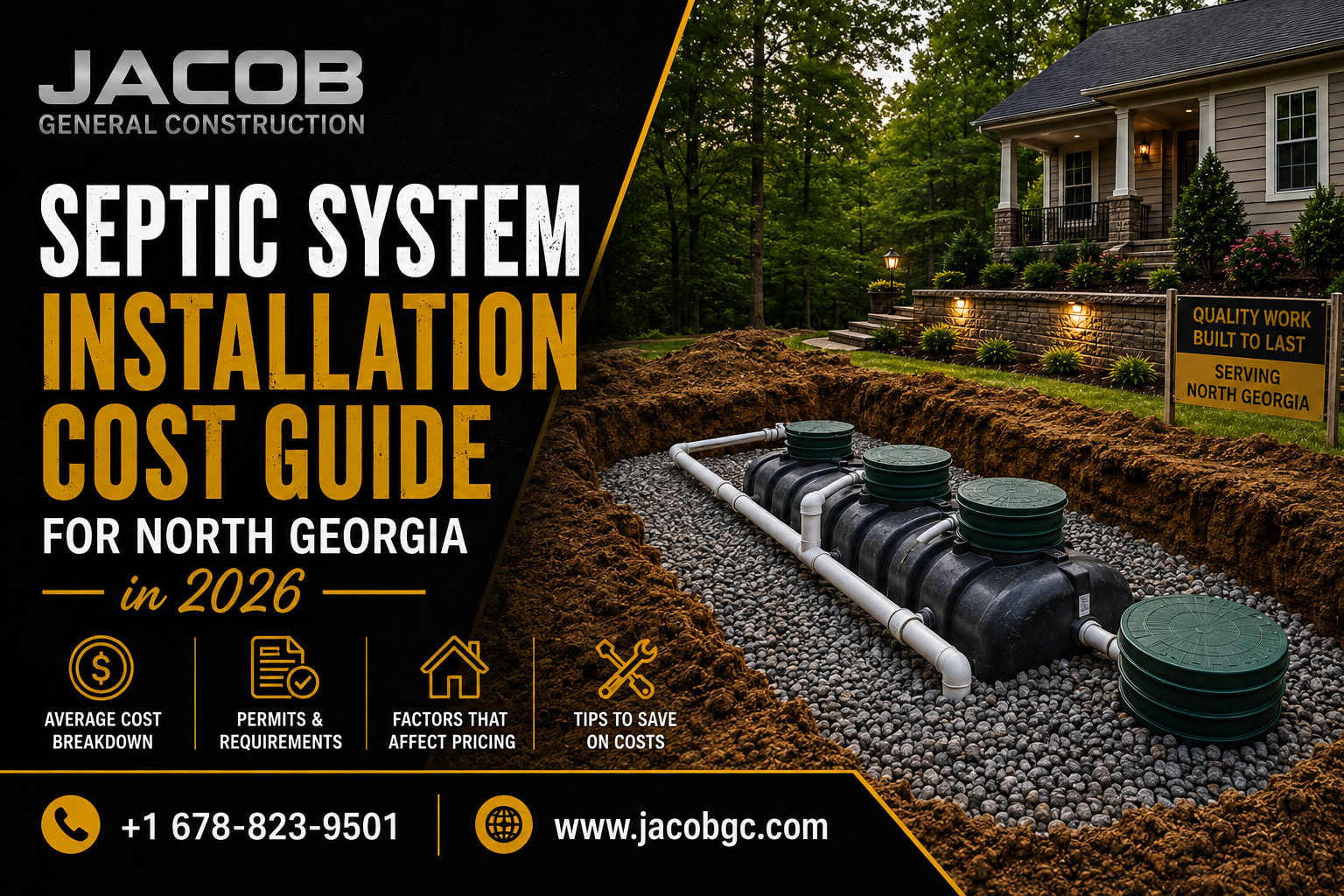
For septic system installation cost, one of the first questions we hear from North Georgia homeowners planning a new build or a septic replacement is simple: “What’s this going to cost me?” The honest answer is that septic costs vary more than almost any other part of home construction, because they depend entirely on what your specific soil can — and can’t — support. Here’s a real breakdown of what drives the price, so you know what to expect before you get a quote.

Why Septic Costs Vary So Much
Unlike a concrete driveway, where pricing is fairly predictable per square foot, septic system costs depend on your lot’s soil, slope, size, and household needs. Two homes on the same street can have completely different septic costs if one sits on soil that supports a conventional system and the other requires an engineered one.
The factors that matter most:
- Soil type and perc test results — the single biggest cost driver in North Georgia, where clay soil frequently requires an engineered system instead of a standard one
- System type — conventional gravity system, versus an engineered mound or drip system
- Household size — determines tank size and drain field capacity requirements
- Lot size and slope — steeper or smaller lots can limit design options and add installation complexity
- Site accessibility — how easy it is to get equipment to the installation area
- Permitting and inspection fees — set by your county Environmental Health Department
General Cost Ranges
These are general planning ranges for North Georgia. Your actual cost depends on your specific soil evaluation and site conditions — treat these as a starting point for budgeting, not a quote.
Conventional Septic System
A standard gravity-fed system, on soil that passes a conventional perc test, is typically the most affordable option. This works well on lots with decent drainage and adequate space for a standard drain field.
Engineered Systems (Mound or Drip)
Because North Georgia’s clay soil often can’t support a conventional system, a significant share of homeowners here need an engineered design. These systems cost more due to imported materials (sand, for a mound system), pump equipment, and more complex design and installation. Expect engineered systems to run notably higher than a conventional system — the exact premium depends on your specific soil and site conditions.
Septic Tank Replacement Only
If your drain field is still functioning and only the tank needs replacement, this is a smaller project than a full system install — but cost still varies with tank size, access to the site, and whether the old tank needs to be removed or can be abandoned in place per county rules.
Drain Field Replacement Only
If your tank is fine but your drain field has failed, replacement cost depends heavily on whether the new field can go in the same footprint, or whether soil conditions require relocating it, or an entirely different system type.
What’s Usually Included in a Septic Installation Quote
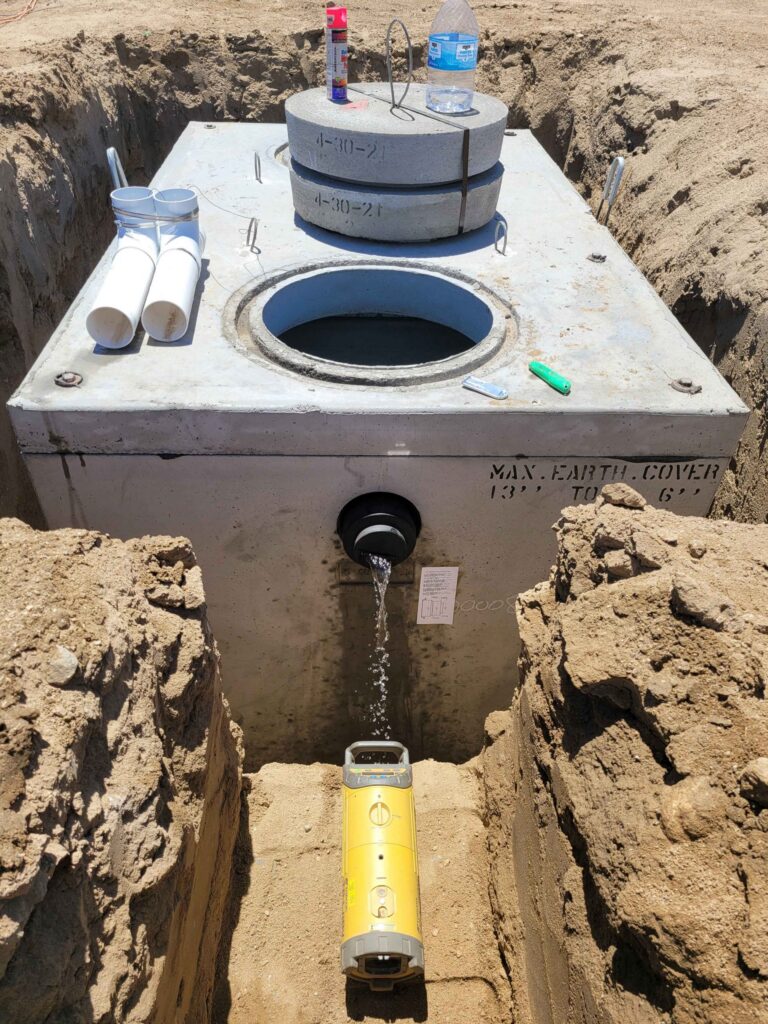
- Site evaluation and coordination with soil testing
- System design (or coordination with a licensed designer for engineered systems)
- Permitting with your county Environmental Health Department
- Excavation and installation of tank and drain field
- Backfill and site restoration
- Final inspection coordination
What Can Add to the Cost
- Difficult site access — heavily wooded lots, steep driveways, or tight urban lots can require smaller equipment and more labor hours
- Rock encountered during excavation — common in parts of North Georgia and can require additional equipment
- Engineered system upgrades — a mound or drip system costs more than conventional in both materials and design
- Larger household size — more bedrooms/bathrooms typically means a larger tank and drain field are required by code
- Existing system removal — demolishing and properly disposing of a failed old system before installing a new one
How to Get an Accurate Number for Your Property
Because so much depends on your specific lot, the only way to get a real number is a site visit and (if you haven’t already had one) a perc test. Any quote given without a soil evaluation is a rough estimate at best. If you’re comparing quotes from different contractors, make sure each one is based on the same soil data and the same system type — otherwise you’re not really comparing apples to apples.
Questions worth asking any contractor before you commit:
- Has a perc test been done on my property, and does your quote reflect the actual results?
- Is this quote for a conventional or engineered system?
- What size tank and drain field is being quoted, based on my household size?
- Are permitting and inspection fees included, or separate?
- What’s your timeline, and does it account for county permit approval time?
Budgeting for New Construction
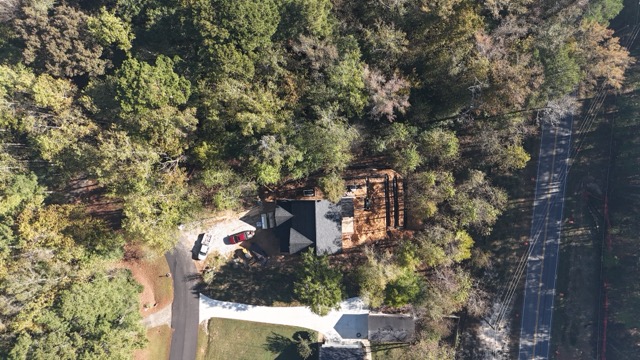
If you’re planning a new home, it’s worth getting your septic site evaluation done early — before your house plans are finalized. On clay-heavy North Georgia lots, the septic design can influence where your house sits, how much usable yard you have, and your overall site budget. Waiting until plans are locked in can mean expensive redesigns if the soil doesn’t support what you originally planned.
Frequently Asked Questions
What’s the cheapest type of septic system to install? A conventional gravity-fed system, on soil that passes a standard perc test, is generally the most affordable option. Whether your lot qualifies for one depends entirely on your soil evaluation results.
Does homeowners insurance cover septic system replacement? Typically, no. Standard homeowners insurance usually doesn’t cover septic system failure due to age, wear, or lack of maintenance. Some policies may cover damage from a sudden, specific covered event — check your individual policy for details.
Are there financing options for septic installation? Many septic contractors offer financing options, and some counties or state programs offer assistance for septic repairs in certain circumstances. Ask your contractor directly about available financing when you request your estimate.
Why do two contractors give me such different septic quotes? Quotes can vary significantly if they’re based on different assumptions — different system types, different tank sizes, or one contractor working from an actual soil evaluation while another is estimating without one. Always confirm what each quote is actually based on before comparing.
Is septic installation included when I buy vacant land, or is it a separate cost? It’s a separate cost. Raw land typically doesn’t include a septic system, so you’ll need to budget for soil evaluation, design, permitting, and installation as part of your overall build cost.
Top 7 Proven Septic System Installation Cost Tips in North Georgia (2026 Guide)
Planning a custom home build or replacing a failing wastewater network across North Georgia requires clear financial forecasting before breaking ground. Because underground infrastructure depends entirely on geological conditions, evaluating septic system installation cost involves much more than picking a tank size from a catalog. Soil permeability, hillside slopes, rock shelves, and county permitting rules all directly shape your final budget.
Jacob General Construction provides full-scale civil engineering, heavy excavation, and wastewater solutions across Metro Atlanta with over 15 years of experience. Whether utilizing this septic system installation cost guide in north georgia for new builds or drain field upgrades, full-service execution spans from level 3 soil testing to final health department sign-offs.
Section 1: 2026 Septic System Installation Cost Breakdown by System Type
The overall septic system installation cost in North Georgia varies across four main tiers depending on soil conditions and property layout:
Key Cost Influencers
- Soil Permeability & Perc Tests: Piedmont clay heavily dictates septic system installation cost through required engineering.
- Bedroom Count: Daily wastewater flow regulations scale tank and absorption line capacity.
- Site Access & Rock Excavation: Slopes, trees, or granite formations demand specialized machinery and rock-breaking tools.
Section 2: Geotechnical Soil Surveys & Septic Perc Tests in Georgia
Accurate engineering relies on certified field data prior to excavation:
Executing a certified level 3 soil survey (level III soil survey) alongside formal septic perc tests in georgia evaluates soil horizons, clay concentration, water tables, and percolation drop rates (MPI). Favorable drainage maintains standard septic system installation cost ranges, whereas slow MPI or shallow bedrock requires custom blueprints.
Section 3: Heavy Clearing, Logging, and Site Preparation
Proper land clearing protects long-term system integrity and prevents structural pipe failures that drive up septic system installation cost.
- Tree Operations: Felling within fulton county citation or cherokee county citation areas utilizing industrial chippers and on-site mulching to produce generic, brown, or black mulch for slope stabilization.
- Grubbing & Fill Dirt: Complete root removal and stump grinding backed by clean structural fill dirt via tandem truck hauling, carefully avoiding compaction over absorption zones.
Section 4: Septic Tank vs. Septic Field North Georgia Component Costs
Balancing a septic tank vs septic field north georgia configuration ensures compliant, long-lasting treatment:
- Tank Options: Concrete septic tank units offer maximum structural weight against clay shifts, while plastic septic tank options resist corrosion on tight or steep lots.
- Capacity Sizing: Commonly scaled to a 1000 gallon tank, 1500 gallon tank, 2000 gallon tank, or 2500 gallon tank based on bedroom counts.
- Auxiliaries: Integration of septic riser access, pump tanks, electrical conduit, schedule 40 PVC sewer line, water line, and gas line paths.
- Absorption Fields: Selection between gravel beds containing pea gravel, #57 stone, and sand versus high-capacity plastic chambers.
Section 5: Drainage Grading & Earthwork Around Your Septic Layout
Protecting absorption fields from surface water runoff is critical to avoiding saturation:
- Grading & Swales: Professional grading service in alpharetta ga execution utilizing earth forming and earth shaping for vegetated swales and turf sod or slate chips.
- Stormwater Control: Deep French drain systems, trench drains, and #57 stone foundations connected to storm drain networks or flow wells to preserve water quality.
- Access & Driveways: Crushed aggregate base layers and gravel driveway structures built with river stone, riverstone, or riverbed materials.
Section 6: Coordinating Foundations, Driveways, and Hardscaping
Combining site development with concrete and landscaping operations optimizes overall project timelines and septic system installation cost:
- Foundations: Slab on grade foundation and mono slab foundation pours by experienced foundation contractors and cement contractors.
- Hardscapes: Reinforced concrete driveways, driveway approach structures, driveway apron transitions, and concrete walkway installations paired with precision concrete cutting and concrete demolition.
- Finishes: Interlocking pavers, masonry pillars, columns, and selective tree trimming or tree removal.
Section 7: Local Permitting & Regional Expertise Across North Georgia
Navigating localized municipal and county compliance across excavation companies in alpharetta ga and surrounding districts:
- City of Alpharetta & City of Roswell Citations: Tree preservation and strict utility setback audits.
- City of Milton & City of Woodstock Citations: Large estate drip-field and low-impact rural grading guidelines.
- Fulton, Cherokee & Forsyth County Citations: Piedmont clay level 3 soil compliance and health department sign-offs.
- Gainesville Citation Communities: Lake Lanier watershed protection and zero-runoff standards.
Section 8: Smart Ways to Manage & Lower Your Septic System Installation Cost
- Pre-Purchase Soil Testing: Verify soil feasibility prior to land acquisition to anticipate engineering fees.
- Consolidate Contractors: Combine logging, grubbing, grading, and installation under a single provider.
- Install Risers & Filters Upfront: Prevent future excavation by adding grade-level septic risers early.
- Protect Yard Drainage: Route roof water and swales away from absorption beds to extend system longevity.
Section 9: Hidden Expenses That Impact Septic System Installation Cost
When reviewing contractor proposals across North Georgia, an incomplete quote can quickly turn an affordable project into a financial headache. Understanding hidden variables ensures your septic system installation cost remains accurate from initial site staking to final county approval. Many low-ball bids omit critical site preparation tasks, leaving homeowners responsible for unexpected change orders once heavy excavation machinery arrives on the lot.
Rock Excavation, Tree Clearing, and Soil Hauling
North Georgia’s rolling terrain frequently hides solid granite shelves just a few feet beneath the surface. Encountering bedrock during trench digging requires specialized hydraulic hammers or controlled rock-breaking equipment, which can significantly raise your septic system installation cost. Similarly, heavily wooded acreage demands extensive tree felling, brush chipping, and deep stump grinding before any drain field layout can begin. If native soil fails percolation standards, importing clean fill dirt or washed sand via tandem dump trucks adds both material and hauling charges to your total budget.
County Permitting, Soil Surveys, and Engineering Fees
Before breaking ground in Fulton, Cherokee, or Forsyth counties, property owners must budget for regulatory compliance. A certified Level 3 soil survey and formal percolation testing represent essential upfront investments that dictate your final septic system installation cost. When clay-heavy lots require an engineered mound or drip system, hiring a licensed civil designer to draft custom blueprints adds specialized engineering fees, alongside local Environmental Health Department permit and inspection charges.
Section 10: Comparing Contractor Quotes Without Overpaying
Selecting the right ground engineering partner is the smartest way to protect your septic system installation cost while guaranteeing decades of trouble-free performance. When comparing estimates from multiple excavation companies, verify that every proposal accounts for the exact same tank capacity, drain field material, and site restoration scope.
Key Questions to Verify Before Signing a Contract
To ensure complete transparency and prevent surprise charges on your final invoice, confirm these five details with your installer:
- Complete Site Prep & Grading: Does the quoted septic system installation cost cover rough clearing, root grubbing, and finish grading to divert surface stormwater safely away from the absorption bed?
- Tank Material & Riser Upgrades: Verify whether the bid includes a heavy-duty concrete or plastic septic tank sized properly for your home’s bedroom count, along with ground-level risers and an effluent filter.
- Drain Field Specifications: Confirm whether your septic system installation cost is calculated for traditional #57 stone and perforated pipe trenches or modern gravel-free infiltrator chambers.
- Utility Line Protection: Ensure the contractor handles safe trenching and sleeving around existing water lines, gas lines, and electrical conduits without extra hourly surcharges.
- Post-Installation Restoration: Ask if final backfilling, topsoil spreading, and grass seed or straw stabilization are bundled into the base septic system installation cost.
Section 11: Long-Term ROI & Financing Your Septic Investment
Viewing your wastewater setup as a permanent property asset helps put upfront septic system installation cost numbers into clear perspective. A properly engineered and installed system increases residential resale value, prevents environmental contamination, and eliminates recurring repair bills for thirty years or more.
Smart Budgeting and Maintenance Savings
While major home improvements require careful capital planning, several practical strategies help manage your septic system installation cost effectively:
- Bundle Site Work Early: Coordinating your septic layout alongside foundation excavation, driveway grading, and drainage swales reduces equipment mobilization fees and lowers overall septic system installation cost.
- Schedule Routine Pumping: Investing a few hundred dollars every three to five years for professional tank pumping protects your drain field from solid buildup, safeguarding your original wastewater investment against premature field replacement.
- Protect the Drain Field Surface: Keep heavy delivery trucks, recreational vehicles, and deep-rooted trees strictly off the absorption zone to avoid crushed distribution pipes or soil compaction.
By partnering with an experienced, full-service contractor like Jacob General Construction, North Georgia homeowners receive honest, itemized pricing and turn-key execution that keeps their septic system installation cost completely predictable from day one. Call our dedicated team today at 678-823-9501 to schedule your comprehensive site evaluation and receive a transparent, itemized, line-by-line written estimate tailored specifically to your North Georgia property right away now.
Get a Real Number, Not a Guess
At Jacob General Construction, we provide clear, itemized estimates based on an actual site evaluation of your North Georgia property — not a generic ballpark. Whether you’re installing a new system, replacing a failed drain field, or just want to know what to budget for before you buy land, we’ll walk the property with you and give you real numbers.
Ready to find out what your septic project will actually cost? Contact Jacob General Construction for a free, on-site estimate.
Frequently Asked Questions About Septic System Installation Cost
- Cheapest System: Conventional gravity setups with standard perc tests offer the lowest baseline cost.
- Engineered System Add-on: Mound or drip systems typically increase budgets by $8,000 to $16,000+ due to specialized pumping and sand fill.
- Insurance Coverage: Standard policies exclude normal wear, aging, or saturation maintenance.
- Quote Variance: Incomplete bids often omit rock excavation, soil hauling, or full site restoration.
Explore our complete range of structural, paving, and site preparation solutions by visiting our Our Services page. You can also review official transportation and construction-related guidelines through the Georgia Department of Transportation (GDOT) website.
Article Comments (0)