

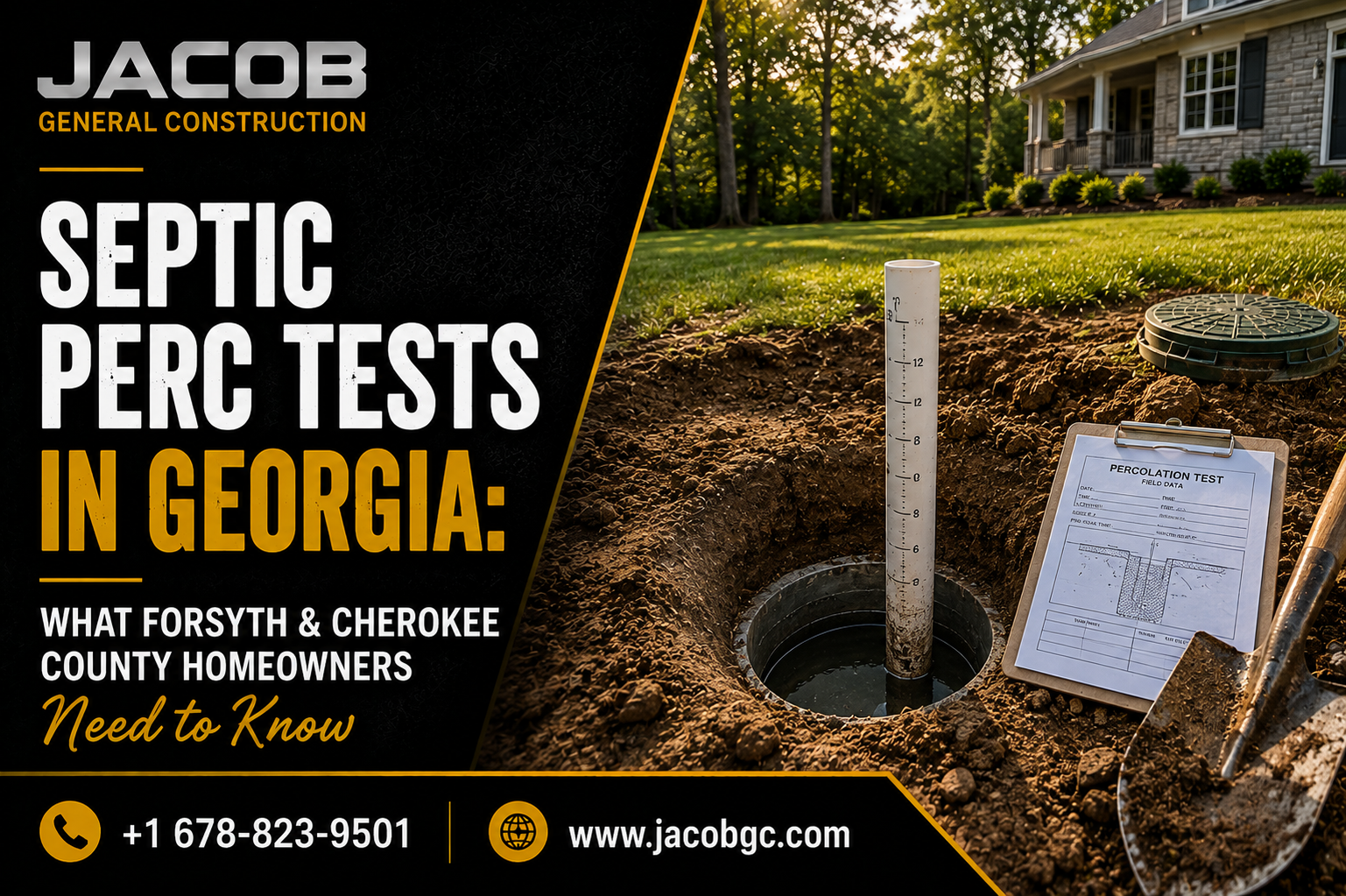
Septic perc tests in Georgia stand between your blueprints and your building permit if you’re planning to build a home in North Georgia and your property isn’t connected to municipal sewer. Also known as a soil percolation test, it’s a small procedure with a big impact on your budget, your site plan, and sometimes even where your house can sit on the lot.
Here’s what Forsyth County, Cherokee County, and the rest of North Georgia homeowners need to know before they schedule one.
What Is a Perc Test, Exactly?
A percolation test measures how quickly water drains through the soil on your property. A technician digs a series of test holes, fills them with water, and times how fast the water level drops. That absorption rate — measured in minutes per inch — tells engineers and the county health department whether your soil can support a standard septic drain field, or whether you’ll need a different kind of system altogether.
In Georgia, this test isn’t optional. Under the state’s On-Site Sewage Management System rules, a perc test (or an equivalent soil evaluation) is required before your county Environmental Health Department will issue a septic permit.
Why North Georgia Soil Makes This Test So Important
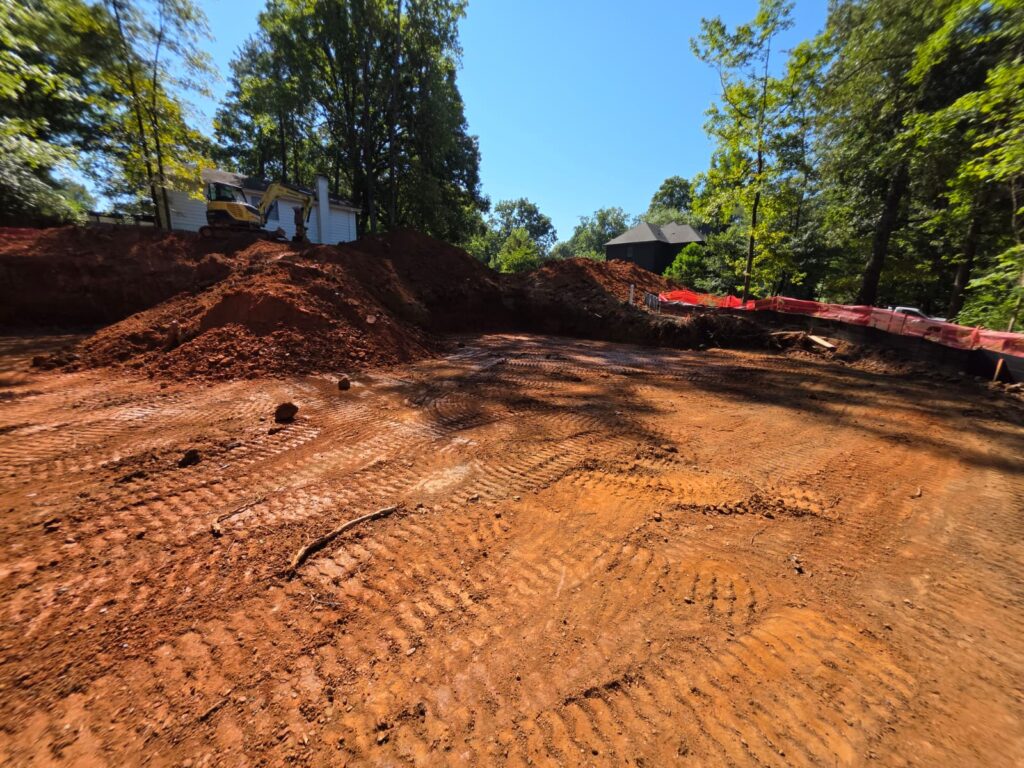
If you’ve ever dug a hole in your backyard in Milton, Alpharetta, Cumming, or Canton, you already know the culprit: red clay. Georgia’s Piedmont clay soils are notorious for poor drainage. Clay particles are small and tightly packed, so water moves through them slowly — sometimes far too slowly to support a conventional septic system.
This matters more in North Georgia than in a lot of other parts of the state, because:
- Forsyth and Cherokee County lots are frequently on hillsides or rolling terrain, which affects both drainage and where a drain field can legally be placed relative to slope.
- New subdivisions are often built on land that was recently cleared or graded, which can compact the topsoil and slow percolation rates further.
- Rock and shallow bedrock are common in parts of North Georgia, which can limit how deep a system can be installed.
None of this means you can’t build — it just means the type of septic system your lot needs is decided by the test, not by what you’d prefer to install.
What Happens During the Test
- Site evaluation. A soil scientist or certified evaluator reviews your lot, checks the topography, and identifies where the test holes should go — usually in the area where the drain field is proposed.
- Test holes are dug. Several holes are dug to a specified depth, typically matching the depth of the proposed drain field trenches.
- Presoak. The holes are filled with water and left to presoak, often overnight, to saturate the surrounding soil and produce an accurate reading.
- Timed measurements. Water is added again, and the technician records how far the water level drops over a set time interval.
- Results and system design. The absorption rate determines what type of system your lot can support.
What the Results Mean for Your System
- Fast-draining soil can typically support a conventional gravity-fed drain field — the most common and least expensive septic system type.
- Slow-draining soil (very common in North Georgia clay) may require an engineered system such as a low-pressure dosing system, a sand mound system, or a drip distribution system. These systems cost more to install but allow you to build on soil that wouldn’t otherwise pass.
- Very poor drainage or shallow rock may require significant site modification, an alternative system approved by the county, or in rare cases, relocating the drain field to a different part of the property.
Do You Need a Perc Test If You’re Buying an Existing Home?
If you’re buying a home with an existing septic system, a full perc test usually isn’t required — but a septic system inspection is strongly recommended, and if you plan to add a bedroom, build an addition, or install a pool, your county may require verification that your existing drain field has enough capacity. Some North Georgia counties also require a repair permit and updated evaluation before any modification to an existing system.
Local Process: Who’s Involved
- County Environmental Health Department — Forsyth County and Cherokee County each administer septic permitting through their local Health Department, following Georgia Department of Public Health rules. They review your soil evaluation, issue the permit, and inspect the system before it’s covered.
- Certified soil scientist or evaluator — performs the actual perc test and soil analysis.
- Licensed septic installer — designs and installs the system based on the approved soil evaluation.
Because requirements and fees vary by county, it’s worth contacting your local Environmental Health office early in the planning process — before you finalize your house plans — so your septic system design and your building footprint aren’t fighting each other later.
Plan the Test Before You Plan the House
The biggest mistake we see North Georgia homeowners make is designing their home first and treating the septic system as an afterthought. On clay-heavy lots, the perc test result can change where your house sits, how big your usable yard is, and your overall site development budget. Getting the soil evaluation done early — ideally before you finalize architectural plans — saves you from expensive redesigns down the line.
7 Top Proven Septic Perc Tests in Georgia Tips: Forsyth & Cherokee County Guide
Building a custom home or developing rural acreage across North Georgia requires thorough underground planning before a single blueprint is finalized. When your property sits outside municipal sewer networks, one mandatory evaluation stands between your land purchase and your county building permit: soil percolation testing. Understanding how septic perc tests in georgia work helps property owners avoid costly site redesigns, budget accurately for wastewater infrastructure, and prevent premature system failures on challenging terrain.
At Jacob General Construction, we combine over 15 years of civil engineering, land development, and heavy excavation expertise to guide homeowners and builders through every phase of underground site prep. Whether you are scheduling septic perc tests in georgia for a wooded hillside lot in Cumming or verifying drain field boundaries in Canton, our licensed team coordinates seamlessly with certified soil scientists and county health officials.
Section 1: What Are Septic Perc Tests in Georgia and Why Are They Required?
A soil percolation test—commonly called a perc test—measures the exact rate at which water absorbs into the ground on your property. Under Georgia Department of Public Health regulations for On-Site Sewage Management Systems, counties require documented soil data before issuing any residential or commercial building permit. Relying on certified septic perc tests in georgia ensures that treated wastewater from your home will filter safely through native earth layers rather than pooling on the surface or contaminating local groundwater.
How North Georgia’s Piedmont Red Clay Impacts Absorption
If you have ever excavated a trench in Milton, Alpharetta, Forsyth County, or Cherokee County, you know the primary geological hurdle: dense Piedmont red clay. Unlike loose coastal sand, clay particles are microscopic and tightly packed, causing rainwater and effluent to move slowly. Conducting septic perc tests in georgia is especially vital in our region due to three local factors:
- Steep Hillsides and Rolling Terrain: Sloped lots in Forsyth and Cherokee counties restrict where absorption trenches can legally sit relative to property lines and elevation drops.
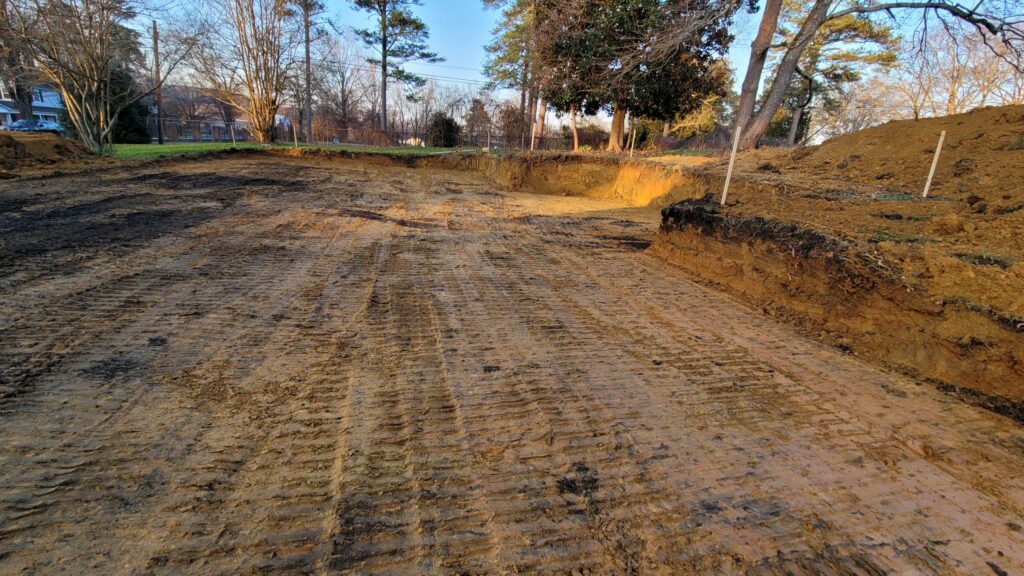
- Compacted Subdivision Soils: Newly cleared subdivisions often suffer from heavy bulldozer traffic that crushes topsoil porosity, making professional septic perc tests in georgia essential before assuming a lot will drain well.
- Shallow Bedrock Shelves: Hidden granite formations close to the surface limit trench depth and force engineers to design alternative wastewater layouts.
Section 2: Level 3 Soil Surveys vs. Traditional Perc Testing
Many property owners confuse a visual soil evaluation with a physical water drop test. In modern Georgia permitting, county Environmental Health Departments frequently require a comprehensive level 3 soil survey (also documented as a level III soil survey) alongside or in place of traditional septic perc tests in georgia.
What Certified Soil Scientists Evaluate
During a formal soil survey, a licensed soil classifier uses a backhoe or hand auger to examine deep soil horizons across your proposed building site. Rather than simply pouring water into a hole, the scientist analyzes soil texture, color mottling, seasonal high water tables, and restrictive rock layers. Combining a detailed level 3 soil evaluation with septic perc tests in georgia gives civil engineers the exact percolation rate—measured in minutes per inch (MPI)—needed to draft a code-compliant septic design.
Section 3: Step-by-Step Process of Septic Perc Tests in Georgia
Knowing what happens on-site helps landowners prepare their acreage and keep permitting timelines on track. From initial staking to final county review, septic perc tests in georgia follow a structured five-step sequence:
- Preliminary Site Plan Review: A certified evaluator reviews your rough site plan, locating proposed house footprints, wells, driveways, and property setbacks to pinpoint the best primary and repair drain field zones.
- Test Hole Excavation: Crews dig multiple test pits or boreholes across the proposed absorption area to the exact depth of the planned drain field trenches.
- Overnight Presoak Period: Technicians fill the holes with clean water and allow them to soak overnight. Presoaking saturates dry clay particles so the test reflects real-world wet winter conditions rather than artificially fast dry-soil absorption.
- Timed Percolation Measurements: The next day, water is added to a calibrated level, and the technician measures how many inches the water drops over set thirty-minute intervals. Accurate septic perc tests in georgia require multiple consistent readings to establish a reliable MPI rate.
- Engineering Report & County Submittal: The evaluator compiles the absorption metrics into an official report submitted to your county Environmental Health Department to approve your septic design.
Section 4: Interpreting Your Results & Choosing the Right Septic System
The numerical findings from septic perc tests in georgia directly dictate what type of wastewater infrastructure you can install and how it impacts your overall septic system installation cost guide in north georgia budget.
Fast to Moderate Percolation (10 to 45 MPI)
Lots with loamy topsoil and well-structured subsoils easily pass septic perc tests in georgia, qualifying for a conventional gravity-fed system. Understanding the balance of a septic tank vs septic field north georgia layout is straightforward here: clarified liquid flows naturally from a concrete septic tank or plastic septic tank (sized as a 1000 gallon tank, 1500 gallon tank, 2000 gallon tank, or 2500 gallon tank based on bedroom count) into a standard drain field. Trenches are built using washed pea gravel, clean #57 stone, and sand or modern plastic chamber systems and infiltrators, all fitted with accessible septic riser lids.
Slow Percolation or High Water Tables (Over 60 MPI)
When dense clay produces slow drop rates during septic perc tests in georgia, a conventional gravity trench will fail inspection. Instead, engineers specify an alternative engineered system utilizing a secondary pump tank and dedicated electrical conduit to dose effluent evenly into an elevated sand mound or a shallow sub-surface drip irrigation grid. While engineered designs increase upfront investment, they provide decades of reliable service on difficult North Georgia terrain.
Section 5: Heavy Clearing, Logging, and Site Prep Around Test Zones
Preparing a wooded lot so evaluators can access test locations requires extreme care. Running heavy machinery carelessly across a proposed drain field crushes soil pores and causes otherwise good land to fail septic perc tests in georgia.
Controlled Land Clearing and Mulching
When clearing wooded acreage inside a fulton county citation zone or a cherokee county citation perimeter, Jacob General Construction uses low-impact logging and tree felling techniques. Our crews keep heavy feller bunchers strictly outside staked soil test zones, routing cleared brush and fallen trees through an industrial chipper. This on-site chipping and mulching process converts raw wood waste into functional mulch, rich brown mulch, and decorative black mulch used to stabilize slopes and protect exposed topsoil.
Stump Grinding, Grubbing, and Earthwork Protection
Once testing is complete and permits are issued, our professional excavation service in alpharetta ga executes targeted clearing, root grubbing, and stump removal. Using high-torque stump grinding units, we eliminate buried root balls that could rot and form a dangerous sink hole. Clean fill dirt hauled by our tandem truck and dump truck fleets is used for structural pads—never dumped over the native soil approved during septic perc tests in georgia.

Section 6: Drainage Grading & Stormwater Control to Protect Drain Fields
Even a property that passes septic perc tests in georgia with flying colors can experience premature field saturation if surface stormwater floods the absorption trenches. As a premier grading contractor, we pair every septic installation with a comprehensive grading plan and precision earthwork.
Managing Stormwater Runoff and Drainage
Jacob General Construction implements specialized grading and drainage solutions to protect wastewater systems from surface water intrusion, as detailed on jacobgc.com:
- Grading and Swales: Custom contouring using swale channels, turf sod, and decorative slate chips diverts runoff away from absorption beds.
- Subsurface Drains: Installation of French drain and trench drain systems wrapped in geotextile fabric and bedded in #57 stone captures standing water and ponding water, routing flow into storm drain lines or flow wells to protect water quality.
Section 7: Coordinating Driveways, Foundations, and Hardscaping
Underground wastewater boundaries dictate the placement of all structural and hardscaping elements on your property:
- Foundations: Experienced work with foundation contractor and cement contractor teams ensures safe setbacks for slab on grade foundation and mono slab foundation builds over compacted crusher run and aggregate base layers.
- Driveways and Access: Construction of engineered gravel driveway paths using river stone, riverstone, or riverbed materials, alongside concrete driveway approach and driveway apron transitions with necessary concrete cutting or concrete demolition.
- Hardscaping and Utilities: Installation of pavers, masonry pillars, columns, tree trimming, tree removal, and underground utility routing for water line, sewer line, and gas line connections.
Section 8: Local Permitting Across Forsyth, Cherokee & North Georgia Counties
Permitting and site compliance vary by local jurisdiction across Metro Atlanta:
- Forsyth County & Cherokee County: Strict compliance with Piedmont clay level 3 soil rules and 100% reserve field sizing.
- Alpharetta & Roswell: Tree-save ordinances and stormwater management during infill development.
- Milton & Woodstock: Estate and equestrian guidelines emphasizing low-impact land development and rural buffers.
- Fulton County & Gainesville: Watershed safeguards near Lake Lanier and the Chattahoochee River.
Work With a Team That Knows North Georgia Soil
At Jacob General Construction, we’ve installed septic systems across Forsyth, Cherokee, and the surrounding North Georgia counties, and we know this region’s clay soil better than most. We coordinate with certified soil evaluators, handle the permitting process with your county Health Department, and design a system — conventional or engineered — that’s built to hold up on your specific lot.
Planning a new build or septic replacement in North Georgia? Contact Jacob General Construction for a site evaluation and free estimate.
Explore our complete range of structural, paving, and site preparation solutions by visiting our Our Services page. You can also review official transportation and construction-related guidelines through the Georgia Department of Transportation (GDOT) website.
Frequently Asked Questions
How much does a perc test cost in Georgia?
Costs vary by county and lot conditions, but homeowners should budget for both the soil evaluator’s fee and the county Environmental Health Department’s permit review fee. Contact your local Health Department or a septic contractor for current pricing in your area.
How long does a perc test take?
The test itself typically takes one to two days, including the presoak period. However, scheduling a certified evaluator and getting county review can add one to several weeks to the overall timeline, so it’s best to start early.
What happens if my property fails the perc test?
A failed perc test doesn’t mean you can’t build. It means your lot needs an engineered septic system — such as a mound or drip system — designed specifically for slow-draining soil. These systems are common in North Georgia and are fully code-approved.
Do I need a new perc test if I’m just replacing my septic tank?
Usually not, if you’re replacing the tank in the same location and not increasing your home’s bedroom count or water usage. However, if you’re expanding your drain field or your existing system’s history is unclear, your county may require a new evaluation.
Can I do a perc test myself to save money?
No. Georgia requires perc tests to be performed or supervised by a certified soil scientist or evaluator, and results must be submitted to your county Environmental Health Department for permit approval. A self-administered test won’t be accepted.
Article Comments (0)