

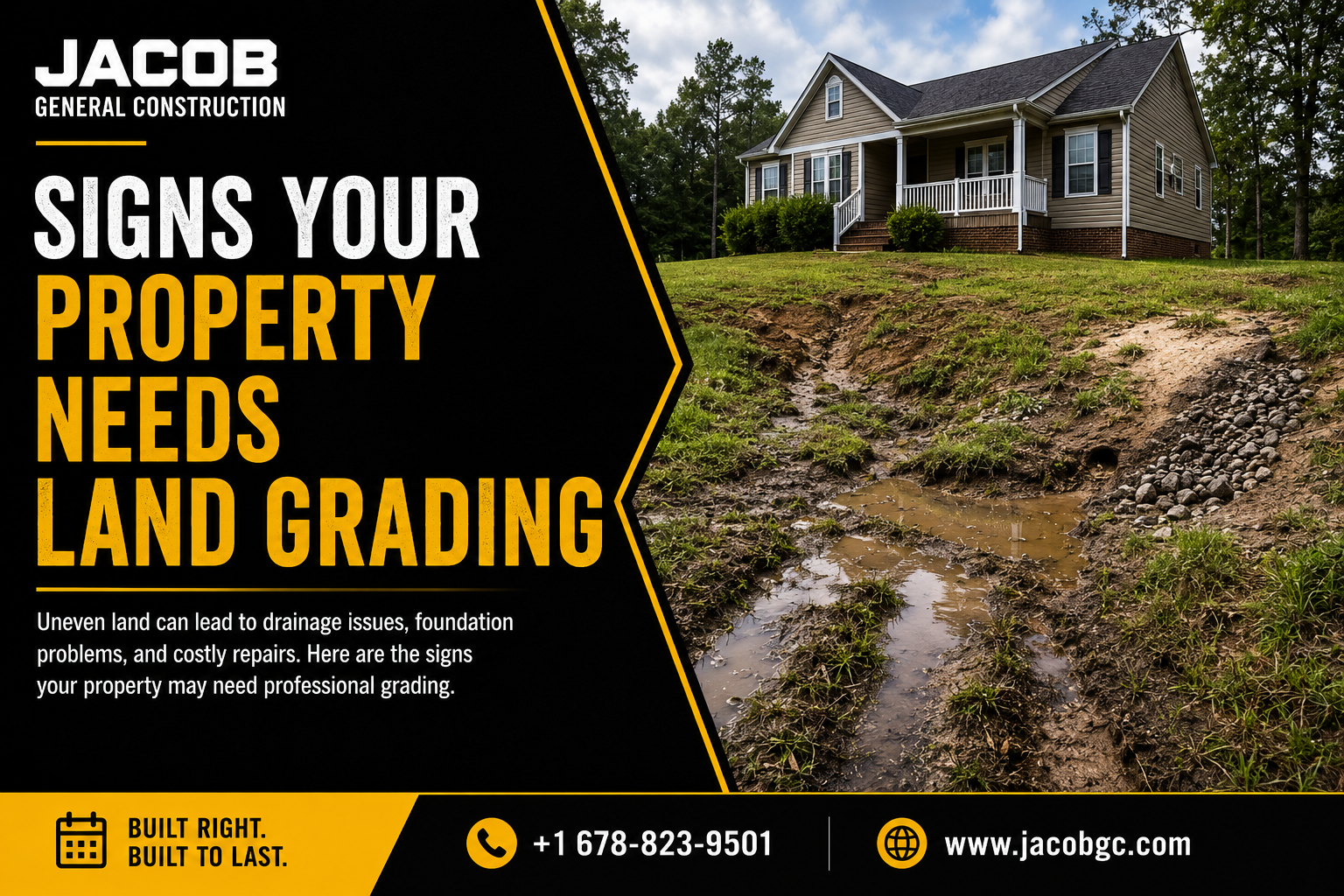
Most homeowners in Milton and Alpharetta don’t think about land grading and land grading services until something goes wrong — a flooded flower bed, a driveway that’s cracking apart, or water creeping toward the garage after every storm. The truth is, land grading problems rarely show up on day one. They build gradually, often over several rainy seasons, until the signs become impossible to ignore.
Knowing what to look for can save you from years of frustration and thousands of dollars in avoidable repairs. Below, we’ll walk through the most common warning signs that your property needs land grading, why they happen, and what tends to make them worse in North Georgia’s climate and soil.
1. Water Pools Near Your Home After Rain
This is the single most common sign we see. If you notice standing water near your foundation, garage, or crawl space entry point after a rainstorm — and it takes hours (or longer) to drain — your property’s grade isn’t doing its job.
Ideally, the ground around your home should slope away from the foundation at a minimum of about 6 inches over the first 10 feet. When that slope is missing, reversed, or too shallow, water has nowhere to go but toward your house. Over time, that moisture works its way into foundation walls, crawl spaces, and basements, leading to cracking, mold, and structural damage that’s far more expensive to fix than the original grading would have been.
2. Your Yard Has Low Spots or Uneven Ground
Walk your yard after a good rain. If you find soggy patches, small ponds, or areas where grass struggles to grow no matter what you do, you likely have low spots where water collects instead of draining through.
These low spots are often the result of settling, poor original grading, or years of soil erosion moving dirt from higher areas to lower ones. Beyond being an eyesore, standing water in your yard breeds mosquitoes, damages grass and landscaping, and can seep toward your foundation if the low spot is close enough to the house.
3. Your Driveway Is Cracking, Rutting, or Washing Out
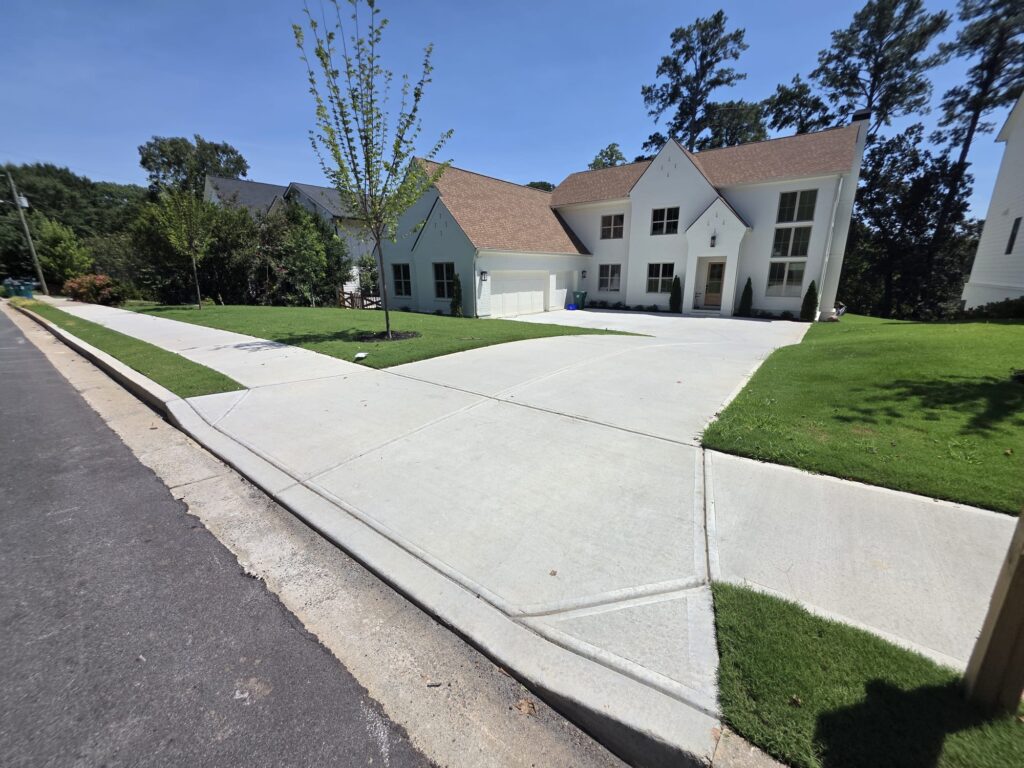
Driveways depend heavily on the grade of the ground beneath and around them. If your driveway wasn’t graded correctly to begin with, or if the grading has shifted over time due to erosion, you’ll start to see:
- Cracks running across or along the driveway surface
- Ruts or grooves where water repeatedly flows across it
- Gravel or stone washing to the edges or downhill after storms
- Pooling water at the base of the driveway or near the garage
A driveway sitting on an improperly graded base will keep deteriorating no matter how many times you patch or resurface it. The underlying grade has to be corrected first.
4. Erosion Is Visible on Slopes or Around Your Foundation
If you notice exposed roots, small gullies, or bare patches of dirt on sloped areas of your property, that’s active erosion — and it’s a clear sign that water is moving across your land faster or in a different direction than the grade was designed to handle.
Erosion near your foundation is particularly concerning because it can undermine the soil that’s supporting your home’s footing. Left unaddressed, it tends to get worse with every heavy rain, especially in North Georgia’s clay soil, which erodes differently than sandier soil and can create deep channels over time.
5. The Ground Slopes Toward Your House Instead of Away From It
This one’s easy to miss because it develops gradually — sometimes due to original construction grading that was never quite right, sometimes because of soil settling over the years. If you stand at your foundation and the ground rises as you move outward from the house instead of dropping away, water is being funneled directly at your home every time it rains.
This is one of the more serious grading issues because it puts your foundation at constant risk. It’s also one of the more common issues we’re called out to fix in older Milton and Alpharetta neighborhoods where grading standards or practices have changed since the homes were originally built.
6. You’re Planning New Construction, an Addition, or a Major Landscaping Project
Even if your property doesn’t currently show obvious drainage problems, any of these projects should prompt a grading evaluation first:
- Building a home addition
- Installing a septic system
- Pouring a new driveway, patio, or slab
- Major landscaping or hardscaping work
- Installing a pool
Building on top of ground that hasn’t been properly graded just relocates the problem — usually somewhere more expensive to fix later. It’s far more cost-effective to grade the site correctly before construction begins than to deal with drainage issues after the new structure is in place.
7. Your Yard Is Difficult to Mow, Landscape, or Use
Beyond the drainage concerns, poor grading simply makes a yard frustrating to live with. Awkward slopes, low spots that stay muddy, and uneven terrain make mowing difficult, limit where you can put patios or play areas, and make landscaping an uphill battle — sometimes literally.
If you’ve found yourself avoiding certain parts of your yard because they’re always wet, always muddy, or just awkward to navigate, grading can reshape that space into something usable again.
8. You’re Seeing Foundation Cracks or Basement Moisture
This is the sign that should get immediate attention. Hairline cracks in a foundation, damp basement walls, or a musty smell in a crawl space often trace back to water that’s been sitting against the foundation for months or years due to improper grading. While not every foundation issue is grading-related, it’s one of the first things worth ruling out — and correcting the grade can often stop the problem from getting worse.
Why These Signs Show Up More in North Georgia
Milton and Alpharetta sit on rolling terrain with clay-heavy soil that drains more slowly than sandy or loamy soil. Clay soil holds water longer, which means poorly graded properties in this region tend to show drainage problems faster and more severely than they might elsewhere. That same soil also expands and contracts with moisture changes, which is part of why foundation issues tied to poor drainage are so common in this area.
What to Do If You Recognize These Signs
If any of this sounds familiar, the next step is a professional evaluation — not guesswork or a DIY fix that might make the problem worse. A grading contractor familiar with local soil and terrain can walk your property, identify exactly where water is moving incorrectly, and put together a plan to correct it.
Jacob General Construction has spent over 15 years grading residential properties throughout Milton, Alpharetta, and the surrounding North Georgia area. We know this soil, this terrain, and the drainage problems that come with both. If you’re seeing any of the signs above, call us at 678-823-9501 for a free grading evaluation.
8 Warning Signs Your Property Needs Land Grading Services in North Georgia
Most homeowners in Milton and Alpharetta rarely think about land grading and land grading services until a severe rainstorm causes a flooded flower bed, a cracking driveway, or water creeping toward the garage door. In reality, terrain issues build gradually across wet seasons until structural damage becomes impossible to ignore. Recognizing early warning signs and hiring professional land grading services protects your home’s foundation, septic system, and landscaping from thousands of dollars in avoidable repairs.
Whether you are searching online for land grading contractors near me to fix backyard pooling or planning new land development, understanding when to call experienced land grading services is essential for North Georgia property owners.
8 Clear Signs You Need Professional Land Grading Services
If you notice any of these symptoms on your residential or commercial lot, scheduling land grading services promptly prevents long-term structural deterioration.
1. Standing Water Pools Near Your Foundation After Rain
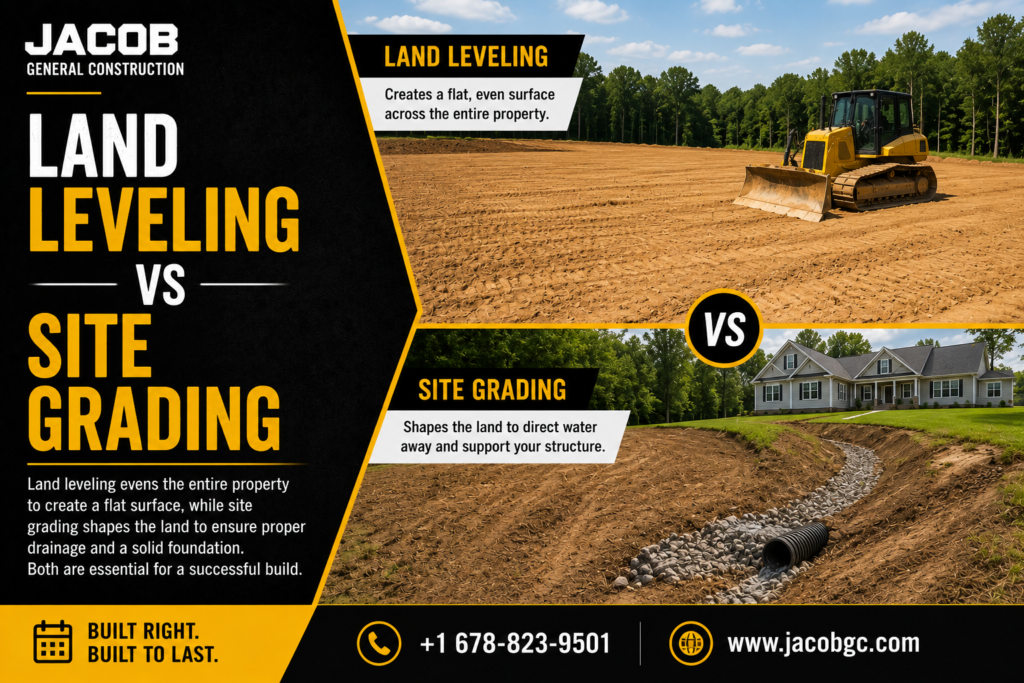
If standing water or ponding water lingers near your exterior walls, garage, or crawl space after a storm, your lot lacks positive drainage. Residential civil engineering standards require a minimum 6-inch drop over the first 10 feet away from your home. Professional land grading services reshape soil slopes so rainwater flows safely away from your slab on grade foundation or mono slab foundation.
2. Soggy Low Spots and Uneven Yard Terrain
Walking across your lawn after heavy rain reveals hidden depressions where water collects instead of draining. Settling fill dirt and poor original earthwork create muddy patches that kill turf grass and breed mosquitoes. Reliable land grading services balance high and low elevations across your entire property.
3. Your Driveway Is Cracking, Rutting, or Washing Out
A paved or gravel driveway depends entirely on the sub-base beneath it. When erosion undermines your driveway approach or driveway apron, you will see surface cracks, deep washout ruts, and gravel scattering into the yard. Comprehensive land grading services rebuild the sub-grade with compacted crusher run and aggregate base before resurfacing.
4. Visible Soil Erosion on Slopes and Around Footings
Exposed tree roots, bare clay channels, and washed-out mulch beds indicate fast-moving storm runoff. Left untreated on steep North Georgia hills, erosion weakens footings supporting your home, retaining walls, structural pillars, columns, or outdoor bunker enclosures. Targeted land grading services slow water velocity and stabilize vulnerable slopes.
5. Ground Sloping Toward Your House Instead of Away
Over decades, natural soil settlement and poorly planned garden beds can create a reverse slope that funnels rainwater directly against your foundation. Many homeowners searching for land grading near me in older Milton and Alpharetta neighborhoods discover reverse grading is the root cause of basement dampness. Corrective land grading services re-establish proper outward pitch.
6. Planning New Construction, Additions, or Septic Installation
During land grading before pouring a concrete walkway, building a patio, or installing a septic tank, hiring qualified land grading contractors ensures your lot meets exact elevation benchmarks. Investing in land grading services prior to construction prevents trapped water around new hardscapes.
7. Steep, Unusable Yard Sections That Are Hard to Maintain
During land grading awkward slopes and muddy depressions make mowing hazardous and limit usable backyard space. Skilled land grading contractors transform rough terrain into functional, well-drained zones ready for outdoor living.
8. Foundation Hairline Cracks, Musty Crawl Spaces, or Sinkholes
Hydrostatic pressure from waterlogged clay soil pushes against foundation walls, causing cracks and crawl space mold. Similarly, decaying buried roots or broken pipes can trigger a hazardous sink hole. Prompt land grading services eliminate surface saturation before structural damage worsens.
Step-by-Step Earthwork, Clearing, and Drainage Solutions
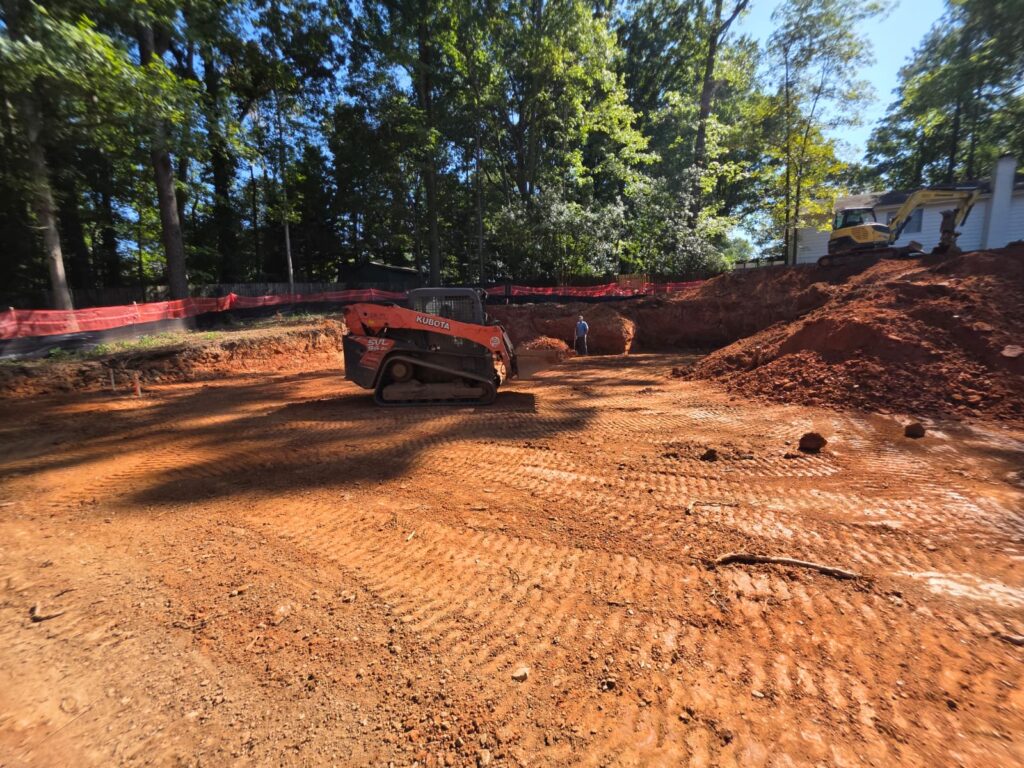
When you hire reputable land grading services in North Georgia, experienced crews follow a proven engineering sequence tailored to dense Piedmont clay.
1. Land Clearing, Tree Removal, and Demolition
Prior to heavy earth shaping and earth forming, sites are prepared using a formal site plan and grading plan:
- Tree Work and Logging: Services include tree felling, tree trimming, tree removal, and handling fallen trees.
- Stump Grinding and Grubbing: Roots are cleared via stump grinding, stump removal, and grubbing, supported by a chipper for chipping and mulching.
- Demolition and Hauling: Old structures undergo concrete cutting and concrete demolition, with debris transported via company dump truck and tandem truck fleets rather than relying on third-party equipment rental.
2. Soil Compaction and Engineered Base Materials
Land grading services establish structural stability using high-grade aggregates and mechanical compaction:
- Base Aggregates: Crusher run and aggregate base form strong sub-bases, while #57 stone, pea gravel, and sand manage drainage and paver bedding.
3. Subsurface Drainage and Water Quality Protection
To combat drainage issues and drainage problem areas, solutions include:
- Surface & Subsurface Controls: Installing vegetated swales, dry riverbed channels with river stone and riverstone, French drain systems, trench drain units, storm drain infrastructure, and flow wells to preserve local water quality.
Protecting Septic Systems, Utilities, and Landscaping During Grading
- Septic System and Drain Field Safety: Operations respect data from your soil survey, level 3 soil (or level III soil) report, and septic design. Protection measures cover your concrete septic tank, plastic septic tank, septic riser, pump tank (ranging from a 1000 gallon tank up to a 2500 gallon tank), and drain field components like chambers, chamber systems, or infiltrators.
- Utility Trenching & Finishing: Crews manage safety clearances for water line, sewer line, gas line, and electrical conduit installations, later enhancing aesthetics with sod, brown mulch, black mulch, and slate chips.
Local Permitting Across North Georgia Cities and Counties
Compliance is maintained with local guidelines across the City of Milton, City of Alpharetta, and City of Roswell (Fulton County), as well as Cherokee County, Forsyth County, City of Woodstock, and Gainesville (design build workflows).
Why Choose Jacob General Construction?
As an experienced grading contractor, foundation contractor, and cement contractor, Jacob General Construction handles full-scale earthwork, mono slab foundation builds, foundation contractor services, and general site prep. For full details on residential or commercial evaluations, contact local teams directly.
Explore our complete range of structural, paving, and site preparation solutions by visiting our Our Services page. You can also review official transportation and construction-related guidelines through the Georgia Department of Transportation (GDOT) website.
Frequently Asked Questions
1. How do I know if my drainage problem is a grading issue or something else?
If water is consistently pooling in the same spots after rain, moving toward your house instead of away, or your yard has visible low spots, grading is almost always at least part of the problem. A site visit can confirm whether regrading alone will solve it or if additional drainage solutions are needed.
2. Can I fix minor grading issues myself?
Small, isolated low spots can sometimes be improved with topsoil and careful leveling. However, grading problems near a foundation, driveway, or septic system usually require professional equipment and grading expertise to correct properly and avoid making drainage worse.
3. How much does it cost to regrade a yard?
Costs depend on the size of the area, how severe the grading problem is, and how much fill dirt or excavation is needed. We provide free on-site estimates so you know the scope and cost before committing.
4. Will regrading my yard damage my landscaping?
Some existing landscaping near the affected area may need to be temporarily removed or adjusted, but a good contractor will work with you to minimize disruption and can often help restore or replant afterward.
5. How urgent is it to fix a grading problem near my foundation?
This should be treated as a priority. Water sitting against a foundation for an extended period can lead to cracking, moisture intrusion, and more costly structural repairs. The longer it’s left unaddressed, the more expensive the eventual fix tends to be.
6. Does regrading help with erosion on slopes?
Yes. Regrading, sometimes combined with other erosion control methods, redirects water flow so it moves in a controlled way rather than cutting new channels down a slope every time it rains.
7. How long does regrading take for an average residential yard?
Most residential regrading projects take a few days to about a week, depending on the size of the area and the extent of the correction needed. We provide a clear timeline as part of your estimate.
8. Is grading a one-time fix, or does it need to be maintained?
Properly done grading is a long-term fix, but soil does settle and shift over time, especially in clay-heavy areas like Milton and Alpharetta. Periodic checks, especially after major landscaping changes or extreme weather, can catch small issues before they become bigger ones.
Article Comments (0)