


Concrete driveway contractors, your driveway is the first thing visitors see and the surface your vehicles cross every day. When it is poured correctly on a well-prepared base, it can serve a property for decades. When it is rushed, cracking, settling, and puddles tend to show up within just a few years. For Alpharetta homeowners planning a new driveway or replacing a worn one, understanding what goes into professional concrete driveway installation makes it much easier to ask the right questions and avoid expensive problems later.
This guide walks through the process from site evaluation to finishing and explains what Alpharetta property owners should consider before hiring a contractor. If you are ready to talk about your project, you can learn more about our concrete service in Alpharetta, GA or contact the Jacob General Construction team directly.
Why Driveway Installation Is More Than Just Pouring Concrete
Many people picture driveway installation as simply pouring concrete into a rectangle. In reality, the pour is one step in a longer process, and the steps that come before it matter most. Concrete is only as good as the ground beneath it. A slab poured over soft, uncompacted, or poorly drained soil will move, and when it moves, it cracks.
A professional installation typically includes evaluating the site, removing the old surface if there is one, grading and compacting the base, setting forms to the correct elevations, placing reinforcement, pouring, finishing, and curing. Skipping or shortening any of these steps is where most premature failures begin.
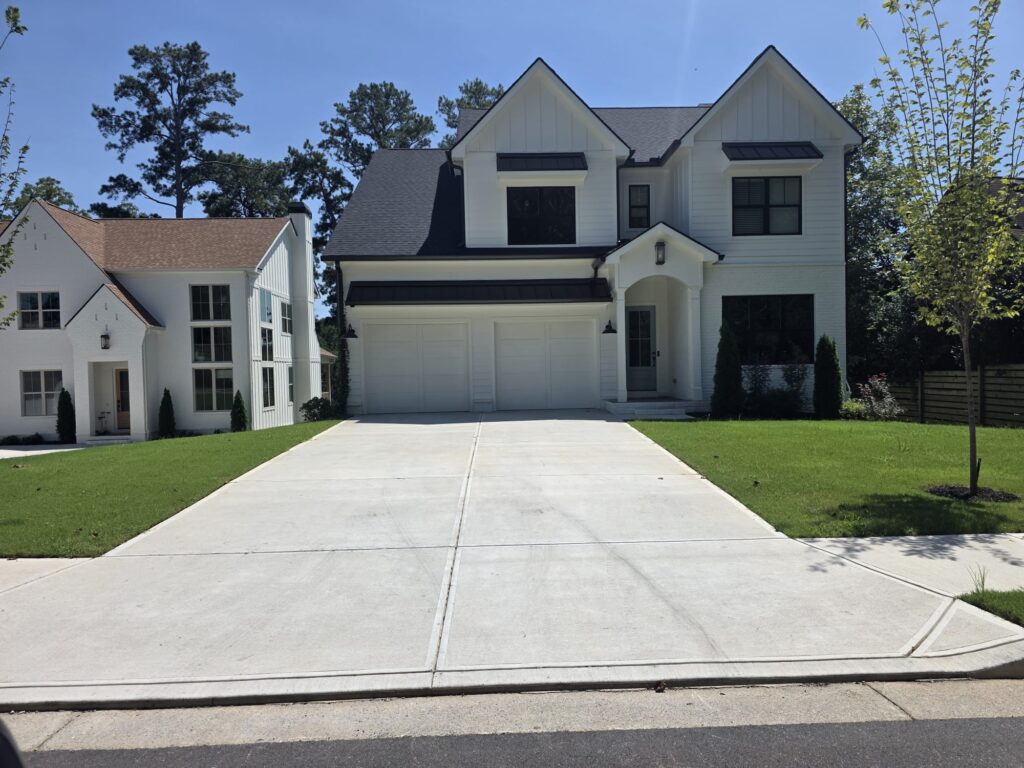
Step 1: Site Evaluation and Planning
Alpharetta properties vary considerably. Some sit on fairly level lots, while others have slopes that send runoff toward the house or the street. Before work begins, a contractor should look at the following:
- Slope and drainage: where water flows now and where it should go once the driveway is in place.
- Soil conditions: clay-heavy soils common across north Georgia hold moisture and can shift, which affects how the base is prepared.
- Intended use: whether the driveway will carry only passenger cars or also trucks, trailers, or delivery vehicles.
- Layout and access: width, length, turning space, and how the driveway connects to the street, garage, and any walkways.
- Existing features: underground lines, mailboxes, retaining walls, and landscaping that may need to be worked around.
Settling these details up front prevents surprises in the middle of the project.

Step 2: Excavation, Grading, and Base Preparation
This is the stage that most influences how long a driveway lasts. Existing pavement or failed concrete is removed, and the area is graded so the finished surface will slope gently to shed water. The subgrade is then compacted, and in many cases a layer of compacted stone is added to give the slab a stable, well-draining foundation.
A properly prepared base does two things. It spreads the weight of vehicles evenly, and it keeps water from collecting underneath the slab. Water trapped beneath concrete is one of the biggest contributors to cracking and settling, especially through Georgia’s seasonal rains and occasional freeze-thaw cycles. Because grading and concrete work are so closely connected, it helps when the same crew understands both.
Step 3: Forming, Reinforcement, and Thickness
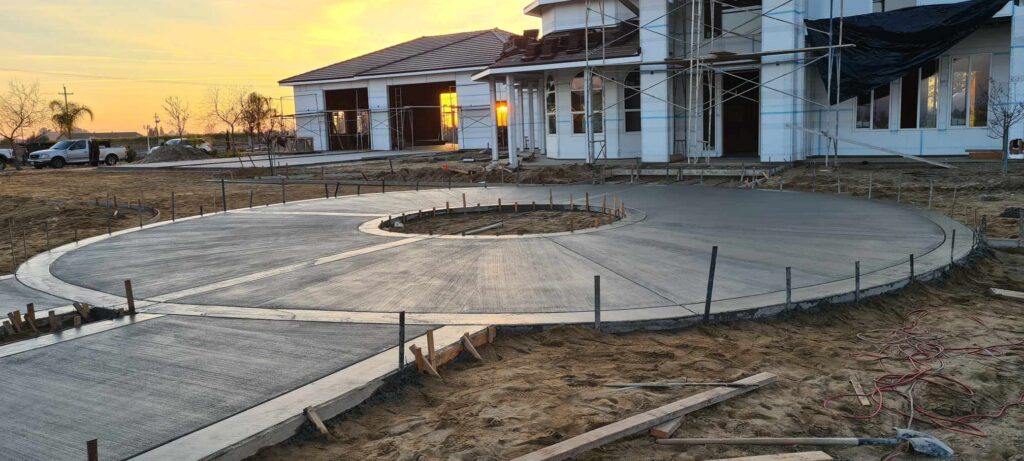
Forms establish the shape, edges, and elevations of the driveway, and they set the slope. Once the forms are in place, reinforcement such as steel rebar or welded wire mesh may be installed to help hold the slab together if minor cracking occurs.
Thickness depends on use. A standard residential driveway is commonly poured at about four inches thick, while driveways that regularly carry heavier loads are typically thicker and more heavily reinforced. Your contractor should recommend a thickness and reinforcement plan based on how the driveway will actually be used rather than a one-size-fits-all number.
Control joints are planned at this stage too. These are intentional lines tooled or cut into the concrete so that, if the slab cracks as it shrinks and cures, the crack follows the joint instead of wandering across the surface.
Step 4: Pouring, Finishing, and Curing
On pour day, concrete is delivered, placed, and leveled within the forms. The surface is then finished, and the finish you choose affects both appearance and safety. Common options include:
- Broom finish: a light texture that provides traction and is the most common choice for driveways.
- Smooth trowel finish: cleaner in appearance, but it can be slippery when wet.
- Stamped or decorative finishes: patterns and colors that resemble stone, brick, or slate, often used for borders and accent areas.
After finishing, the concrete needs time to cure. It can usually be walked on within a few days, but full strength develops over about 28 days. Keeping vehicles off the new surface until your contractor gives the go-ahead protects your investment, and proper curing, including protecting the slab from drying too quickly in hot weather, helps reduce surface cracking.
What Affects the Cost of a Concrete Driveway in Alpharetta?
No two driveways cost the same, and a contractor who quotes a firm price without seeing the property deserves some caution. The main cost factors include:
- The size of the driveway
- Site preparation needs, such as removing an old driveway or correcting the grade
- Thickness and reinforcement requirements
- Finish type and any decorative work
- Site accessibility for equipment and concrete trucks
Rather than comparing quotes on price alone, compare what each one includes. A lower price that skips base preparation or reinforcement often costs more in the long run.
Permits, HOAs, and Local Requirements
Alpharetta has land-development and stormwater requirements that may apply to larger driveways or to projects that change how water drains. If your neighborhood has a homeowners association, it may also have guidelines for driveway width, materials, or finishes. Confirm the applicable permit and HOA requirements before work begins so you are not forced to redo anything later.
Signs Your Existing Driveway Needs Replacement
Not every cracked driveway needs to be torn out, but certain signs point to deeper problems:
- Wide or widening cracks, or cracks where one side sits higher than the other
- Sections that have sunk or settled
- Standing water that never drains
- Crumbling or flaking surfaces
- Repeated repairs in the same area
When the base beneath the slab has failed, patching the surface only hides the problem. A contractor should evaluate the underlying cause before recommending repair or replacement.
Choosing the Right Driveway Contractor in Alpharetta
Look for a contractor who asks about your property’s drainage and intended use, explains their base preparation process, and provides a clear scope of work. Ask about timelines as well. At Jacob General Construction, our goal is to deliver a completed project in the quickest time possible without cutting corners on preparation.
Ready to Plan Your New Driveway?
A concrete driveway is a long-term investment, and how well it performs depends on the work done before and during the pour. Jacob General Construction provides concrete service in Alpharetta, GA for residential and commercial properties, including driveway installation and replacement. Call 678-823-9501 or contact us to discuss your property and request a quote.
Frequently Asked Questions
How long does a concrete driveway last?
With proper base preparation, reinforcement, and reasonable maintenance, a concrete driveway can last for decades. Lifespan depends on soil conditions, drainage, and how heavily the driveway is used.
How long before I can drive on a new concrete driveway?
Concrete can usually be walked on within a few days, but full curing takes about 28 days. Your contractor will advise when vehicles can safely use the new surface based on your specific pour and the weather.
Should my driveway have rebar or wire mesh?
Both are used to help hold a slab together if cracks form. The right choice depends on how the driveway will be used and the conditions on your property, so ask your contractor to explain the reinforcement plan.
Can new concrete be poured over my old driveway?
In some cases a structurally sound surface can be resurfaced, but a driveway with settled sections, widespread cracking, or drainage problems usually needs to be removed and rebuilt on a properly prepared base.
Do I need a permit for a new driveway in Alpharetta?
It depends on the scope of the project, such as the size of the driveway or whether it affects drainage. Confirm the applicable requirements with the city and your HOA, if you have one, before work begins.
Complete Guide to Premier Concrete Driveway Installation Services in Alpharetta, GA
Advanced Surface Engineering for Residential Properties
Choosing the right driveway surface requires a deep understanding of local soil conditions and subgrade preparation protocols. Homeowners frequently require the assistance of professional concrete driveway contractors to evaluate how vehicle loads impact their land. Choosing certified teams guarantees that structural parameters align perfectly with structural engineering guidelines across North Georgia.
Every high-quality project managed by experienced concrete driveway contractors begins with a meticulous site inspection. Technicians determine how daily traffic, environmental exposure, and heavy delivery trucks affect the durability of the concrete. Property owners who hire specialized concrete driveway contractors receive durable driveways that resist long-term cracking and heavy shifting.
Blueprints must detail the structural footprint before heavy mixer trucks roll onto the active construction zone. Licensed concrete driveway contractors establish exact grade levels to ensure the entire subgrade platform remains uniform. Working with established local concrete driveway contractors prevents early foundation failure caused by unconditioned regional soils.
Subsurface Preparation and Professional Earthwork Protocol
Long-term durability depends completely on the quality of the earthwork hidden beneath the visible surface. Elite concrete driveway contractors focus heavily on altering and stabilizing the native soil before pouring aggregate mixes. Rushing this critical earth-forming stage causes premature hollow voids beneath the heavy vehicular surface corners.
The initial process involves strategic earth shaping, complete site clearing, and comprehensive grubbing by our team. Experienced concrete driveway contractors remove old root systems, organic materials, and unstable topsoil layers cleanly. If your lot features dense vegetation, dependable concrete driveway contractors utilize heavy-duty logging machinery for rapid site clearing.
Onsite chipping operations turn fallen timber into landscaping mulch using a high-capacity industrial wood chipper. Our crews also handle grinding, tree felling, tree trimming, and complete tree removal for the driveway. Homeowners rely on specialized concrete driveway contractors to handle these demanding yard transformations without project delays.
Any buried debris or fallen trees are extracted systematically to protect the upcoming foundation layout. Structural stump grinding and total stump removal are performed so the underlying subgrade stays perfectly dense. Expert concrete driveway contractors handle these complex tasks to prevent organic decay from compromising the new driveway.
For sites with uneven terrain or sinkholes, reliable concrete driveway contractors haul in certified fill dirt and provide heavy equipment rentals. Once stabilized, the base is prepared for a structural slab on grade with mechanical compaction using heavy vibratory rollers.
Aggregate Base Architecture and Precision Compaction
Installing layers of coarse #57 stone or crusher run ensures loads are distributed evenly and prevents shifting. Skilled concrete driveway contractors also offer decorative enhancements like architectural pavers or natural river stones.
When managing existing failed surfaces, top concrete driveway contractors perform precision concrete cutting, total demolition, and civil engineering design-build planning.
Advanced Drainage Mitigation and Watershed Stewardship
North Georgia rainstorms require engineered drainage solutions to prevent standing water and freeze-thaw damage. Specialized concrete driveway contractors install turf swales, French drain networks, and high-flow trench systems to protect garage approaches.
Crews carefully locate underground utilities, water lines, and gas conduits before excavation to maintain safety and keep timelines on track.
Septic Infrastructure Integration and Structural Logistics
Protecting underground infrastructure requires mapping level 3 soil profiles and maintaining safe buffer distances around tanks. Experienced concrete driveway contractors ensure heavy machinery stays clear of septic risers and drain fields.
Whether working near 1000-gallon or 2500-gallon systems, trusted concrete driveway contractors safeguard your property from structural failures.
Jacob General Construction manages all local building permits and municipal codes to ensure complete regulatory compliance. Partnering with a dedicated concrete patio contractor in alpharetta guarantees a seamless, long-lasting installation for your property.
Advanced Architectural Finishes and Spatial Aesthetics
Modern hardscape design allows homeowners to customize their entryways while maintaining structural strength. Leading concrete driveway contractors offer various surface textures that blend durability with visual appeal. Choosing premium finishes elevates your property’s curb appeal while ensuring maximum tire traction.
A classic light broom finish is highly recommended by expert local concrete driveway contractors. This specialized texturing method provides an excellent non-slip surface during heavy rainstorms. Homeowners who partner with dedicated concrete driveway contractors enjoy beautiful, low-maintenance entryways for decades.
For unique architectural designs, skilled concrete driveway contractors can install beautiful stamped borders. These patterns realistically mimic natural stone, interlocking pavers, or rustic brick accents seamlessly. Working with creative concrete driveway contractors allows you to match your home’s exterior siding.
Master Class Hydration and Structural Curing Protocols
Concrete achieves its full weight-bearing capacity through a gradual chemical reaction called hydration. Knowledgeable concrete driveway contractors follow strict American Concrete Institute guidelines during the pouring phase. Preventing rapid surface evaporation ensures the interior crystal matrix develops high structural density.
If the moisture evaporates too quickly, the surface layer becomes weak and powdery. Professional concrete driveway contractors utilize premium liquid curing compounds to trap internal moisture. This critical step protects your long-term investment from early scaling or spalling.
Vehicular traffic must be restricted while the concrete cures to its full rating. Specialized concrete driveway contractors provide clear timelines regarding when cars can safely cross. Trusting this process to seasoned concrete driveway contractors guarantees the foundation reaches maximum PSI.
Long-Term Maintenance and Structural Preservation
Periodic sealing shields the concrete surface from grease stains, oil leaks, and weather. Licensed concrete driveway contractors apply penetrating silane sealers to block water absorption completely. Addressing minor hairline cracks early prevents water from softening the base below.
Advanced Concrete Admixtures and Environmental Durability
Modern chemical engineering allows professional teams to enhance the base performance of cement mixes. Experienced concrete driveway contractors often incorporate advanced air-entraining admixtures into the wet slurry. These specialized chemical additives create billions of microscopic air bubbles throughout the concrete profile.
These micro-cavities allow internal water pressure to expand safely during winter freeze-thaw cycles. Qualified concrete driveway contractors utilize these premium commercial mixes to prevent early spalling. Property owners who hire knowledgeable concrete driveway contractors receive driveways designed for changing weather.
Additionally, adding supplementary materials like fly ash enhances the long-term density of the matrix. Certified concrete driveway contractors recommend these sustainable admixtures to lower porous moisture absorption. This advanced engineering step safeguards the internal steel reinforcement grids from heavy corrosion.
Professional Site Restoration and Quality Control Checks
The construction process is only truly complete once final clean-up protocols are executed. Top-rated concrete driveway contractors focus heavily on restoring the surrounding landscape after removing forms. Ensuring the property looks pristine is a signature practice of elite paving crews.
Crews remove wood stakes, smooth out displaced dirt, and prepare borders for fresh sod. Trusted concrete driveway contractors verify that surface margins blend perfectly with existing walkways. Homeowners who partner with dedicated concrete driveway contractors avoid messy post-project cleanup struggles completely.
Technicians also perform mechanical slope checks to ensure surface water sheds toward drainage swales. Specialized concrete driveway contractors utilize digital laser levels to verify structural grade compliance. This meticulous attention to detail proves why choosing established crews yields superior hardscape results.
Explore our complete range of structural, paving, and site preparation solutions by visiting our Our Services page. You can also review official transportation and construction-related guidelines through the Georgia Department of Transportation (GDOT) website.
Article Comments (0)