

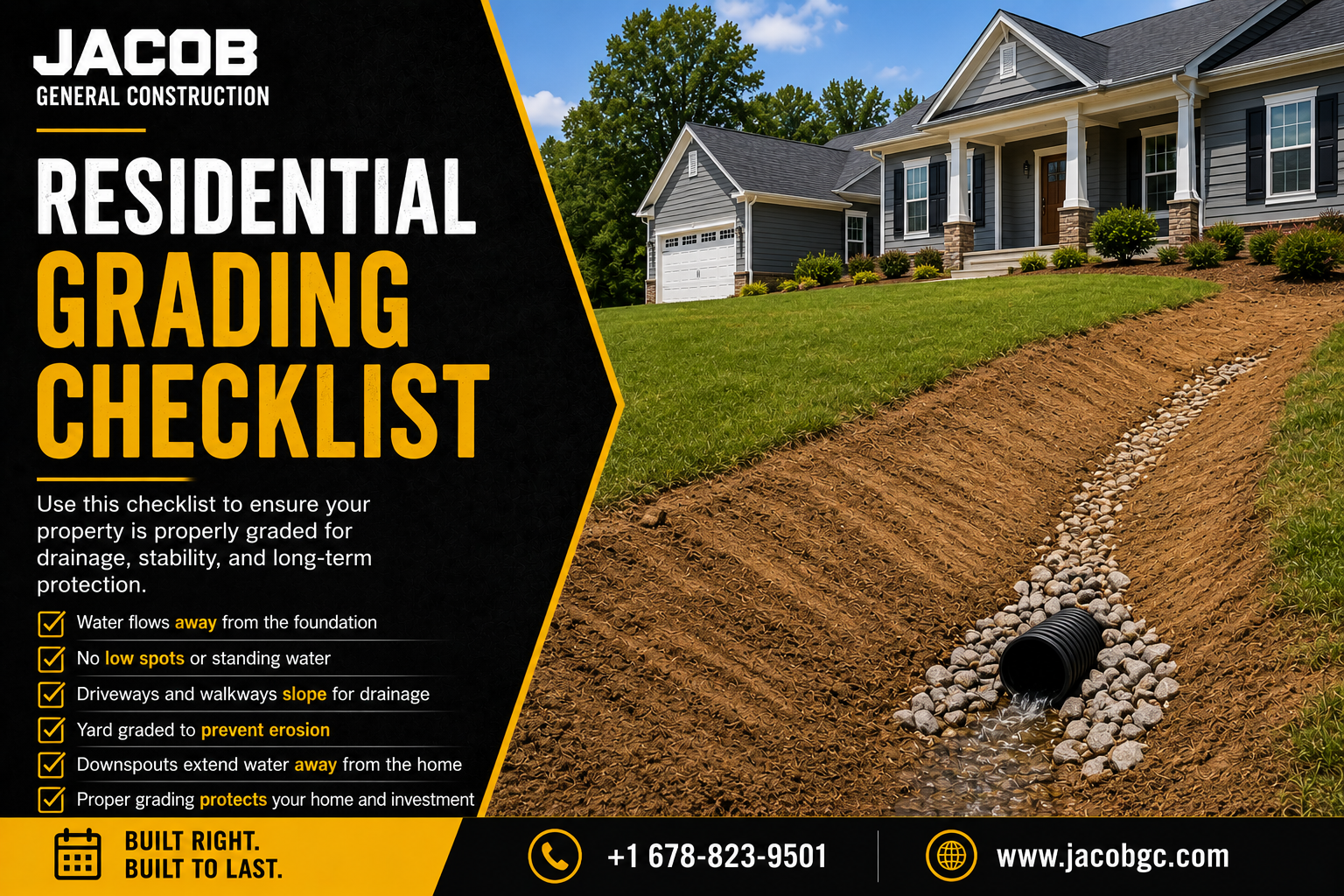
Whether you’re preparing to build a new home, dealing with a drainage problem, or planning a driveway or septic installation, residential grading is one of those projects where doing your homework beforehand pays off. Homeowners in Milton and Alpharetta who go into a grading project with a clear checklist tend to end up with better results, fewer surprises, and a smoother process overall.
This checklist walks through everything worth considering before, during, and after a residential grading project, based on more than 15 years of grading properties throughout North Georgia.
Before Grading Begins
1. Identify the Actual Problem or Goal
Before calling a contractor, get clear on what you’re trying to solve. Is it standing water near the foundation? A driveway that’s washing out? Preparation for new construction? An uneven yard that’s hard to use? Being specific helps a contractor evaluate the right areas of your property and recommend the right scope of work — not more, not less.
2. Walk Your Property After a Rainstorm
If drainage is any part of your concern, observe your property during or right after rain. Note where water pools, how long it takes to drain, and which direction it’s flowing. This firsthand observation is often more useful than trying to describe the problem after the fact, and it gives a contractor a clearer starting point.
3. Check for Utility Lines and Underground Obstacles
Before any digging or grading work begins, underground utilities need to be located and marked. In Georgia, you can request this through 811, the statewide utility location service, before any excavation work starts. This step protects you from costly repairs and safety hazards.
4. Understand Your Property’s Soil Type
Milton and Alpharetta properties commonly sit on clay-heavy red soil, which drains more slowly and behaves differently than sandy or loamy soil. Knowing this in advance helps set realistic expectations for how grading will need to be approached and how long the ground will take to stabilize afterward.
5. Consider How Grading Affects Other Planned Work
If you’re planning a driveway, septic system, patio, or addition alongside your grading project, make sure your contractor knows about all of it upfront. Grading done in isolation, without considering what else is planned, can lead to redoing work later if elevations or drainage don’t line up with subsequent construction.
6. Get Multiple Estimates, But Compare Scope Carefully
Grading estimates can vary significantly based on how much work is actually planned — cut-and-fill volume, compaction requirements, drainage solutions included, and site access. When comparing quotes, make sure you’re comparing the same scope of work, not just the bottom-line number.
7. Ask About Permits
Depending on the scope of the project and your specific municipality or county, grading work — especially larger-scale grading tied to new construction — may require permits. A reputable, licensed grading contractor will know what’s required in Milton, Alpharetta, or your specific area and can help navigate that process.
During the Grading Project
8. Confirm the Slope Standard Being Used
For residential grading near a foundation, the standard is a minimum 6-inch drop over the first 10 feet — roughly a 5% slope. Confirm with your contractor that this standard (or better) is being applied, especially if your primary concern is foundation drainage.
9. Discuss Drainage Points
Water has to go somewhere once it’s redirected away from your home or driveway. Make sure you understand where your contractor is directing that water — a swale, a drain, a lower section of the yard, or toward the street — and whether that destination could create problems for you or a neighboring property.
10. Watch for Proper Compaction
Grading isn’t just about shaping soil — it’s about compacting it correctly so it holds its shape and doesn’t settle unevenly later. This is especially important for building pads, driveway bases, and any area where structures or pavement will be added.
11. Keep Communication Open About Site Conditions
If the contractor encounters something unexpected during the work — unusual soil conditions, old fill dirt, buried debris, or a different drainage pattern than initially assessed — a good contractor will communicate that and discuss any needed adjustments to the plan rather than pushing through without addressing it.
After Grading Is Complete
12. Do a Final Walkthrough
Before considering the project finished, walk the site with your contractor. Confirm the slope looks and feels right, ask about any areas that might need settling time, and make sure the finished grade matches what was discussed in the original plan.
13. Observe the Property After the Next Rain
The real test of any grading project is how it performs during actual rainfall. After the next significant rain, check the areas that were previously problematic. Water should be moving away from your foundation and toward the intended drainage points, without pooling in the areas that were regraded.
14. Plan for New Landscaping or Sod Carefully
If your grading project included areas that will be landscaped or sodded afterward, give the soil some time to settle before finalizing plans, especially in clay-heavy soil common throughout this region. Planting too soon on freshly graded and not-yet-settled ground can lead to uneven results later.
15. Keep Records of the Work Done
Hold onto your estimate, any grading plans, and photos of the completed work. This documentation is useful if you sell the property later, need warranty work, or want to reference what was done if a related project comes up in the future (like a driveway or septic installation).
Special Considerations for New Construction Grading
If your grading project is tied to new home construction, a few additional items belong on your checklist:
- Confirm the building pad elevation is set correctly relative to the surrounding lot and any flood-prone areas
- Make sure grading accounts for the future driveway, septic field (if applicable), and any planned additions
- Verify that rough grading and finish grading are both scoped clearly — they happen at different phases of construction
- Ask how the contractor plans to handle erosion control during construction, particularly on sloped North Georgia lots
Special Considerations for Drainage-Focused Grading
If your primary concern is fixing an existing drainage problem, add these to your checklist:
- Ask specifically how the new grade will address the exact spots where you’ve observed water pooling
- Confirm whether additional drainage solutions (like French drains or swales) are recommended alongside regrading
- Discuss how the correction will hold up given your property’s specific soil and slope conditions
- Get a clear expectation for how soon you should see improvement after the work is done
Why a Checklist Approach Works Better Than Guessing
Grading problems are often invisible until they’re not — until a storm sends water toward your foundation, or a driveway starts falling apart, or a construction project stalls because the site wasn’t prepped correctly. Going into a grading project with a clear checklist helps you ask the right questions, spot potential gaps, and end up with a result that actually solves your problem the first time.
Work With a Grading Contractor Who Knows North Georgia
Jacob General Construction has spent over 15 years grading residential properties throughout Milton, Alpharetta, and the surrounding North Georgia area. We understand this region’s clay soil, rolling terrain, and the drainage challenges that come with both. If you’re planning a grading project — big or small — call us at 678-823-9501 for a free, no-pressure estimate.
Frequently Asked Questions
1. Do I need a permit for residential grading in Milton or Alpharetta?
It depends on the scope of the project and local regulations. Larger grading projects tied to new construction are more likely to require permits than minor yard regrading. A licensed local contractor can tell you what applies to your specific project.
2. How do I choose the right contractor for a residential grading project?
Look for a contractor with specific experience grading properties in your area, since local soil and terrain knowledge matters significantly. Ask for a clear, itemized estimate and make sure they walk the property in person before quoting.
3. What’s the most important item on a grading checklist?
Clearly identifying the actual problem or goal before work begins. Grading done without a clear purpose — whether that’s fixing drainage, preparing for construction, or leveling for landscaping — often leads to work that doesn’t fully solve the underlying issue.
4. How soon after grading can I landscape or plant sod?
It’s generally best to allow some settling time, especially in clay soil, before finalizing landscaping. Your contractor can give you a more specific timeline based on the scope of your project and current weather conditions.
5. Should I get grading done before or after other exterior projects like a driveway or patio?
Grading should almost always happen first. It establishes the base and drainage pattern that other projects, like driveways, patios, or septic fields, depend on.
6. How do I know if my grading project was done correctly?
The clearest test is how your property performs during and after rain. Water should move away from your foundation and toward the intended drainage points without pooling in previously problematic areas.
7. What should be included in a residential grading estimate?
A thorough estimate should break down the scope of cut-and-fill work, fill dirt and stone if needed, compaction, drainage solutions, and labor — not just a single lump-sum number.
8. Can grading checklists apply to both new construction and existing homes?
Yes, though the specifics differ. New construction grading focuses on building pad preparation and future site elements, while grading for existing homes typically focuses on correcting drainage or leveling issues that have developed over time.
Article Comments (0)